
Meningioma Management: When Long-Term Surveillance Leads to Surgical Intervention

Then, earlier this year, the 65-year-old resident of Palm Bay in Brevard County received the news she had long hoped to avoid: The tumor had grown enough that surgery was recommended.
For Ms. Martinez, a wife, mother of two and grandmother of two young boys, the prospect of brain surgery was frightening. But her confidence in Michael McDermott, M.D., a neurosurgeon at Baptist Health Kenneth C. Griffin Neuroscience Institute, helped her move forward. Dr. McDermott is system chief executive of Baptist Health Brain & Spine Care, chief medical executive, and Irma & Kalman Bass Endowed Chair in Clinical Neuroscience at the Institute.
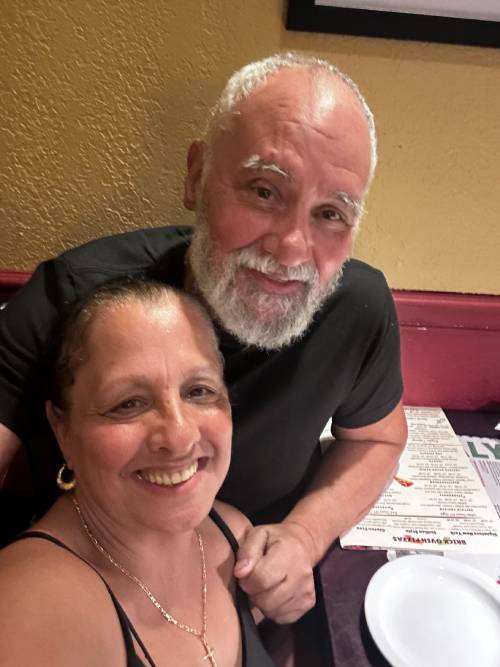
Debbie Martinez
On July 27, 2026, Dr. McDermott surgically removed her meningioma, a tumor that develops in the protective membranes surrounding the brain and spinal cord. More than three months later, Ms. Martinez has returned to work and resumed her normal activities.
“I'm the same person,” says Ms. Martinez, who works as a payroll manager for a healthcare company in Palm Bay. “Even when I went back to work, they were all expecting me to be a little slower or something. They couldn't believe it.”
Dr. McDermott explains why continued monitoring was no longer the best option.
“In her case, there was documented growth, and she was given the option of continued observation, with the understanding that the natural history of her meningioma, if left untreated, would be continued growth,” Dr. McDermott said. “It was too big for radiosurgery. We felt that surgery was the best approach, and that's what we recommended.”
Ms. Martinez’s journey began with an ordinary household accident that led to an extraordinary discovery.
An Unexpected Diagnosis After a Bump on the Head
About 13 years ago, Ms. Martinez was cleaning her home on a Sunday when she accidentally struck her head against something in her closet. She experienced brief dizziness but otherwise felt fine.
The following day, she had a previously scheduled annual physical examination. When her primary care physician asked whether anything unusual had happened recently, Ms. Martinez casually mentioned the incident.
Her physician recommended a magnetic resonance imaging (MRI) scan as a precaution. An MRI uses powerful magnets and radio waves to produce detailed images of structures inside the body, including the brain.
The results revealed something neither woman had anticipated.
“I was actually doing house cleaning on a Sunday. I bumped my head in my closet, and then I got a little dizzy,” Ms. Martinez recalls. “The next day, I had my usual yearly appointment with my doctor. I mentioned that I had bumped my head, and she wanted me to have an MRI just to make sure everything was okay. And lo and behold, there pops up the tumor.”
The scan showed no significant injury from the accident, but it revealed a brain tumor. The discovery was incidental, meaning the tumor was found while doctors were looking for something else.
Ms. Martinez recalls being stunned. “When she told me they had found a brain tumor, I was like — What?”
How common are meningiomas?
“It's the most common brain tumor over the age of 35,” says Dr. McDermott. “It's twice as common in women as in men for the intracranial location. The intention to treat should be based on either documented growth or the development of symptoms and signs that are consistent with the tumor's location.”
Understanding Meningiomas and the Decision to Monitor
Meningiomas arise from the meninges, the thin layers of tissue that protect the brain and spinal cord. Most are benign, meaning they are not cancerous, although some can grow and press against nearby brain structures.
Depending on their size, location and growth rate, meningiomas may cause headaches, seizures, vision changes, weakness or other neurological symptoms. However, many are discovered before they cause noticeable problems.
For patients with small, slow-growing meningiomas that are not producing symptoms, physicians may recommend active surveillance rather than immediate surgery. This approach involves periodic MRI scans to detect changes in the tumor.
After her diagnosis, Ms. Martinez sought several medical opinions. Because her tumor was small, noncancerous and not causing clear symptoms, she was reluctant to undergo an invasive procedure.
“I didn't want to do anything invasive because, at the time, I had already found out that it wasn't malignant, and it was small,” she says. “And obviously, I was terrified.”

Michael McDermott, M.D.
She eventually chose a neurosurgeon who recommended monitoring the tumor with frequent MRI scans initially, followed by less frequent imaging if its growth remained slow.
For approximately a decade, that approach allowed her to continue living normally while keeping track of the tumor.
Finding a Neurosurgeon She Could Trust
When her longtime neurosurgeon stopped seeing patients to pursue an academic career, Ms. Martinez began searching for another specialist.
Living in Palm Bay, several hours north of Miami, she was willing to travel for a physician she trusted. Her online research eventually led her to Dr. McDermott at Baptist Health Kenneth C. Griffin Neuroscience Institute.
“I researched a lot, but when I read everything about him, I was like, wow,” she recalls. “I thought he seemed so good that I probably wouldn't be able to get a new patient appointment.”
To her relief, she was able to schedule a consultation. “From the first call, I just had a good feeling,” she says. “The office staff — I can't say enough about them. They're amazing, all of them.”
During her initial evaluation, Dr. McDermott reviewed her previous MRI scans and medical history. He agreed with the earlier recommendation to continue monitoring the tumor. However, he also explained that the gradual growth documented over the years could eventually make surgery necessary.
“In her case, she had some headaches, and we documented that the tumor was growing slowly,” explains Dr. McDermott. “It had grown by over 33 percent in volume over 10 years. She was relatively young, so if we projected forward another 10 years, we could estimate how big it would become.”
Ms. Martinez continued under his care for approximately two to three years, undergoing follow-up imaging and virtual consultations.
When Watching and Waiting Was No Longer Enough
Although the meningioma had grown slowly, its increasing size eventually raised concerns about leaving it untreated. During a virtual appointment, Dr. McDermott explained that the time had come to consider surgery.
“Then came that scary day when we had a virtual appointment, and he told me, ‘Okay, well, it's time,’” Ms. Martinez recalls. “And I was like, ‘Ugh, time.’ ”
Dr. McDermott discussed her case with his team to evaluate the treatment options. Although a less invasive approach had been considered, the team recommended surgical removal because of the tumor's size and other clinical considerations.
“The alternatives weren't very good,” explains Dr. McDermott. “One was continued observation. We didn't think radiosurgery would be appropriate. She could have had fully fractionated external beam radiotherapy, which would take five and a half weeks, but she wasn't interested in that. The other option was microsurgery, which carried a very low risk profile for that location.”
For Ms. Martinez, the recommendation brought years of uncertainty into sharp focus.
Brain surgery carries potential risks, including bleeding, infection and neurological complications. The specific risks depend on the tumor's location and its relationship to surrounding brain structures.
Dr. McDermott explained the procedure and addressed questions from Ms. Martinez and her family.
“He made me feel very comfortable,” she recalls. “Of course, it was nerve-wracking. He saw it in my face right away. But he was so confident. I really believed I was going to be okay.”
Despite her anxiety, she says the discussions helped her feel prepared. “I told everybody, ‘Be positive. I feel good about this doctor, and my experience has been good.’”
A Moment of Trust Before Brain Surgery
On July 27, Ms. Martinez arrived at the hospital accompanied by her husband and other family members. Although she had completed her preoperative testing and preparations, the reality of undergoing brain surgery remained emotional.
Just before the procedure, Dr. McDermott came to see her. Ms. Martinez remembers reaching for his hand.
“Dr. McDermott came in, and I looked at him, and I just grabbed his hand, and I said: ‘Promise me that you'll take care of me,’ ” she recalls. “He said, ‘I will.’ And I really felt his ‘I will.’ ”
For Ms. Martinez, who describes faith and family as important sources of strength, that exchange provided reassurance. “I wanted to be peaceful at heart, and I did feel peaceful,” she says. “I went in peaceful.”
During surgery, Dr. McDermott performed a craniotomy, a procedure in which a neurosurgeon temporarily removes a section of skull to access the brain and remove a tumor. The bone is typically secured back in place after the operation.
“Thankfully, more than 98 percent of the time, nothing happens and the patient has surgery,” said Dr. McDermott. “Her surgery took about two hours, skin to skin, and she went home on the second day after surgery.”
The procedure was followed by hospital monitoring and recovery. “Her recovery went very, very well. It was pretty routine,” adds. Dr. McDermott.
Dr. McDermott explains the benefits of intraoperative MRI utilized during Ms. Martinez’s surgery.
“One of the advantages of intraoperative MRI is that we can do an immediate postoperative scan to document the extent of removal, and exclude any unsuspected blood clots,” he said. “We can then take the patient to the recovery room without having to put them through another MRI scan while they're awake and recovering from surgery.”
A Faster Recovery Than She Expected
Ms. Martinez remembers waking up in her hospital room after surgery. Although she experienced nausea and vomiting initially, those symptoms improved with care.
She was particularly pleased that Dr. McDermott and his team continued checking on her throughout her hospital stay.
“I thought it was fantastic to see him again because, in my mind, I thought surgeons do the surgery, they wipe their hands, they go, and that's it,” she says. “But it wasn't like that. He came every day, even the last day before I left, to see me. That meant a lot to me.”
Her recovery also included an early return to walking.
When a nurse asked whether she felt ready to get out of bed, Ms. Martinez enthusiastically agreed. Later, when offered a choice between a short walk and a longer one, she chose the longer route.
“They told me I could do the short walk or the long walk, and I said, ‘I want to do the long walk,’” she recalls. “They said, ‘Oh, we have an overachiever here.’ I guess I wanted to show them that I was feeling really good, because I was.”
She was discharged on the second day after surgery. Her recovery has continued at home, with some temporary numbness and unusual sensations near the surgical area. Dr. McDermott explained that these symptoms can occur as affected nerves heal.
Looking Ahead With Confidence
Although the meningioma has been surgically removed, Ms. Martinez understands that continued monitoring remains important.
Meningiomas can sometimes recur after surgery, depending on factors such as tumor characteristics and whether the entire tumor was removed. Follow-up MRI scans help physicians identify any changes that may require further evaluation.
Ms. Martinez expects to undergo annual MRI scans and remain under Dr. McDermott's care for several more years. She is especially grateful to be able to enjoy time with her family, including her two young grandsons.
Her experience has also given her a message for others facing a brain tumor diagnosis.
“I would tell any other patient, I know you'll be nervous, because anybody's nervous. Anything with the brain is scary,” she says. “But they guide you. They make you feel so comfortable and safe.”
Brain tumor surgery has advanced significantly over the past few decades, emphasizes Dr. McDermott.
“In the modern era, craniotomies for meningiomas are extremely safe,” he said. “Removing the tumor and sending it to the laboratory for analysis helps us understand what the tumor is, determine the prognosis, and decide whether the patient might need additional treatment, such as radiation therapy.”
After more than a decade of living with a brain tumor, Ms. Martinez says her outlook remains positive.
“When you first hear that you have a brain tumor, in the back of your mind, you always have that,” she says. “But I always try to have a positive outlook. Of course, we're human, so there are moments when you'll have a little moment here and there.”
Today, she is focused less on the uncertainty of the past and more on the future. “My outlook for the future is: ‘I'm going to be fine. I'm going to be okay.’ ”
