
A Pioneer’s Approach to Rectal Spacers for Prostate Cancer Treatment

Marcio Fagundes, M.D., is emerging as a transformative voice in radiation oncology, pioneering the use of rectal spacers to shield the rectum from potential radiation damage during the treatment of prostate cancer. Having completed more than 1,000 procedures, he is now teaching physicians around the world his innovative techniques, helping to minimize the risk of bowel, urinary and sexual complications following radiation therapy.
The Baptist Health Miami Cancer Institute radiation oncologist began working with SpaceOAR hydrogel more than a decade ago, becoming the first physician to inject the device after its FDA-clearance in 2015. In October of 2019, he was the first doctor in the world to use the next-generation SpaceOAR Vue, which uses iodine contrast to provide enhanced visibility via CT scan. He is also a leader in its application in the proton therapy setting.
How the spacer works
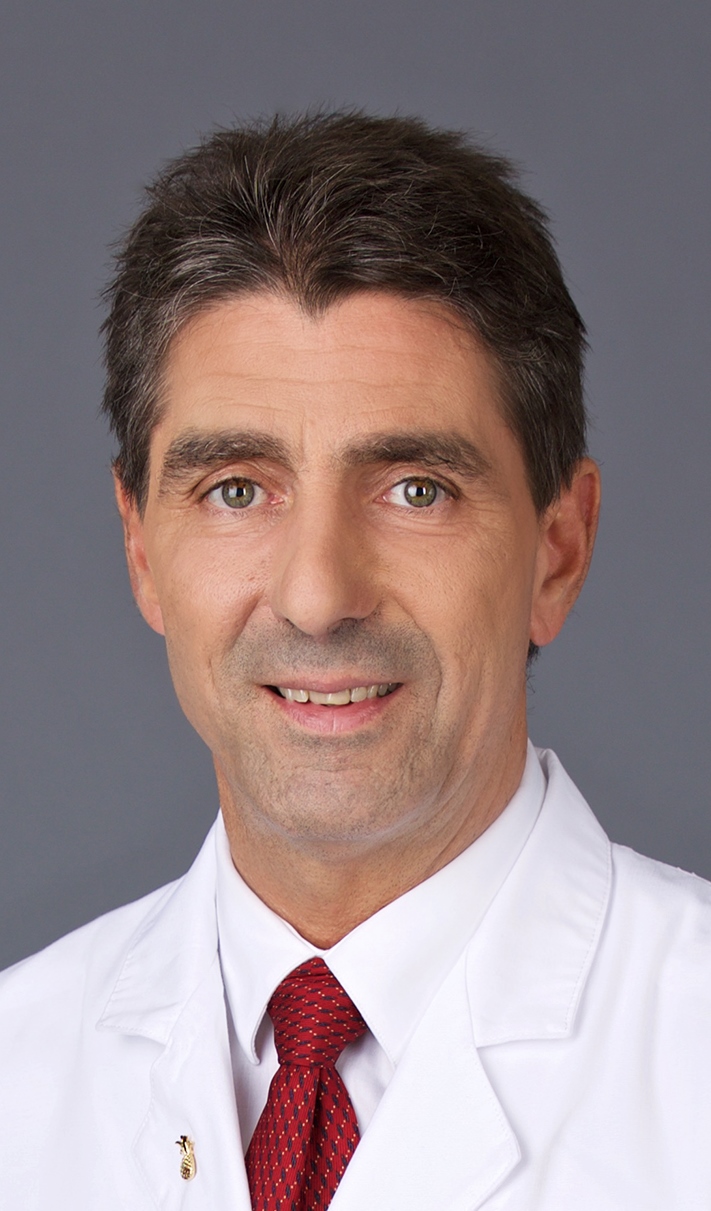
Marcio Fagundes, M.D/p>
SpaceOAR (which stands for Organ at Risk) is one of several rectal spacers available to physicians. It a water-based hydrogel that acts as a temporary cushion between the prostate and rectum during radiation treatment. “The prostate and rectum are essentially touching,” Dr. Fagundes said. “When you inject the gel, it creates about a half inch of space between them. This allows us to safely deliver high radiation doses to eradicate the cancer while protecting the rectum from unnecessary radiation exposure.”
The procedure requires precision because the space between the prostate and rectum is only about 2 mm thick before the spacer is placed. Using ultrasound guidance and local numbing medication, Dr. Fagundes and his colleagues at the Institute insert a very thin needle through the perineum and inject the spacer. The outpatient procedure takes only about 15 minutes and patients walk out and resume normal activities.
The spacer remains stable throughout the radiation treatment period, which can range from two to seven weeks. It’s then absorbed naturally by the body and eliminated over the next six to nine months.
Training physicians worldwide
Because of his expertise, Dr. Fagundes traveled earlier this year with Boston Scientific, the company that developed SpaceOAR, to Japan. The U.S. and Japan have the highest incidence of prostate cancer, according to the World Cancer Resource Fund.
“Men in Japan tend to have smaller prostates, and with this challenging anatomy the procedure can be more difficult,” explained Dr. Fagundes. “The space is thinner and narrower, requiring very meticulous placement.”
He’s also addressed the problems that can occur in patients with larger glands, with his published work “Expanding the Utilization of Rectal Spacer Hydrogel for Larger Prostate Glands (>80cc): Feasibility and Dosimetric Outcomes,” which appeared in Advances in Radiation Oncology (2021).
“There are times when a patient has more prominent veins at the back of the prostate. We place the product under the fascia, but if you are 1mm to 2mm off, you could penetrate one of these vessels,” he said. “This procedure has a landing zone and by conveying the safe way to perform the procedure, we can avoid complications.”
In addition to hands-on training, Dr. Fagundes has developed education modules and videos with Boston Scientific so that physicians globally can learn the proper technique. Approximately 80 percent of prostate cancer patients who need radiation therapy meet the criteria for the use of a rectal spacer, and with more physicians learning the proper technique the benefits of the procedure can now reach a substantial population.
Dr. Fagundes and his colleagues have been involved in clinical trials for rectal spacers and are preparing to launch another trial soon. Miami Cancer Institute offers comprehensive prostate cancer treatment with all radiation modalities, including proton therapy. To learn more about the comprehensive prostate cancer treatment available at Miami Cancer Institute, click here.
