
From Recurrent Syncope to Successful Neurosurgical Intervention: A Young Mother’s Path to Seizure Freedom

When 27-year-old María Ferreira first began experiencing fainting spells and moments of disorientation, she never imagined that the cause would be a rare brain condition resulting in epileptic seizures.
A busy young mother to a three-old and a sales supervisor at Ralph Lauren in Aventura, she initially chalked up her symptoms to anemia — a condition she’d lived with for years.
But what began as fleeting episodes of dizziness and weakness soon escalated into something much more serious. Anemia, which indicates low levels of healthy red blood cells to carry oxygen throughout the body, was not the cause. She had no idea that these episodes were seizures associated with epilepsy, a diagnosis she would receive at the Epilepsy Monitoring Unit (EMU) at Miami Neuroscience Institute.
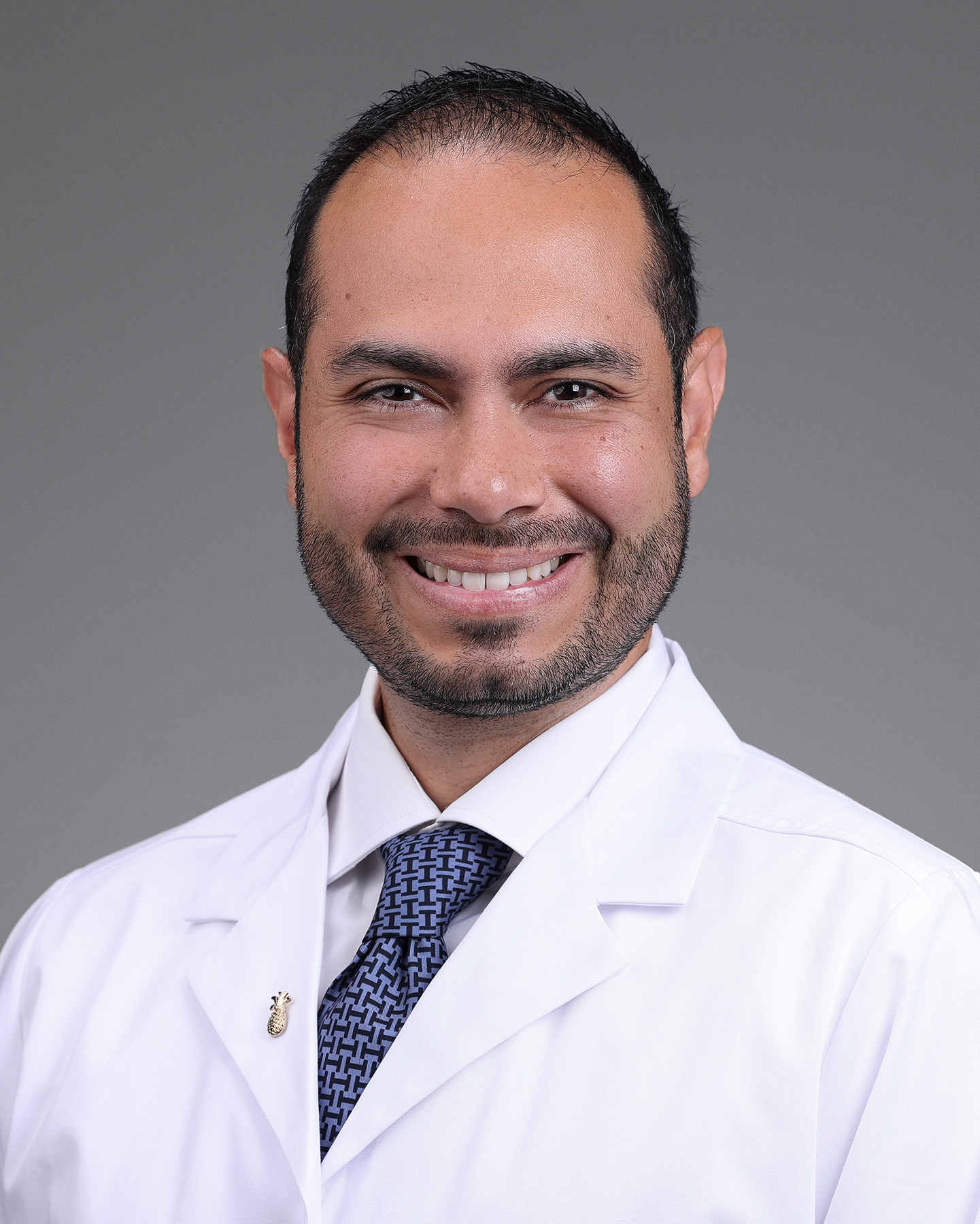
Carlos Millan, M.D.,
“I’ve always had chronic anemia, but it’s controlled. I had transfusions before,” she says. “So when I fainted or felt light-headed, I thought, ‘That’s just how anemia is.’ It seems that from day one I was having epileptic seizures.”
The type of seizure most commonly and stereotypically depicted in movies is the ”generalized tonic-clonic seizure” — which is less common that other types of epileptic seizures such as those experienced by Ms. Ferreira, explains Carlos Millan, M.D., neurologist at Baptist Health Miami Neuroscience Institute, who specializes in the treatment of epilepsy and led the team that treated Ms. Ferreira.
“It’s important to know that not all seizures are like the ones you see in the movies,” said Dr. Millan. “Not all seizures involve people who fall to the floor and start shaking. Those are the least common type of seizures. Many seizures are manifested by just losing their words (ability to speak) and some people just stare. Or some people experience shaking on one part of the body.”
Her Fainting and Loss of Awareness Take Alarming Turn
Ms. Ferreira’s diagnosis of epilepsy would be preceded by frightening episodes. In early 2025, the brief fainting spells became harder to ignore. One episode struck her while at work —an intense pressure on her chest, heat rushing through her body, and a terrifying inability to speak.
“It felt like someone was standing on top of me,” Ms. Ferreira explains. “I could hear, but I couldn’t speak. It only lasted about 30 seconds, but it was so strong. They checked everything, and it all seemed fine. I didn’t think it was anything serious.”
But as the weeks went by, the episodes came more frequently — in January and February — and finally, in April, a frightening event forced her to seek emergency help.
“I was driving to work when my hands went numb,” she remembers. “I started sweating; I couldn’t speak. I stopped the car near an urgent care center. They said everything looked okay, but when I got home my sister told me, ‘No — you’re going to the hospital.’ I had already been in pain for almost a week.”
The Diagnosis: A Cavernoma in the Left Temporal Lobe
At Baptist Health Baptist Hospital, imaging tests revealed the true source of her symptoms — an intracranial lesion known as a cavernoma, located deep within the left temporal lobe of her brain, near the regions responsible for speech. Cavernomas are clusters of abnormal blood vessels that can trigger seizures or neurological symptoms when they irritate surrounding tissue.
“They told me I had a cavernoma on the left side of my brain, right next to the veins that help you speak,” she explains. “It was like a little popcorn kernel, right there. I never imagined something like that could happen.”
Recognizing the complexity of her symptoms, Ms. Ferreira’s neurosurgeon, Robert Wicks, M.D., co-director of cerebrovascular surgery and director of the Neurosurgical Anatomy Laboratory at Baptist Health Miami Neuroscience Institute, referred her to Dr. Millan.
“Dr. Wicks scheduled an appointment for me with Dr. Millan because he suspected the cavernoma was causing my episodes,” she recalls. “From the moment I met them, I felt they were angels. They explained everything that could happen, and I simply trusted them—and, first and foremost, God.”
Monitoring and Understanding the Seizures
Dr. Millan admitted Ms. Ferreira into the Epilepsy Monitoring Unit (EMU) at Miami Neuroscience Institute, where her brain activity could be observed continuously.
“We took into account that her (Ms. Ferreira’s) episodes were short-lasting,” explains Dr. Millan. “The episodes were very similar one to another, so we decided to admit her into our EMU.
Ms. Ferreira was surprised to learn that her episodes were epileptic. Before the diagnosis, she underwent monitoring via EEG (electroencephalogram), which measures the electrical activity produced by the nerve cells (neurons) in the brain.
“They put these little things on my head, and I was there for four days,” she recalls. “They told me I was having electrical discharges in my brain — seizures caused by the cavernoma. I never thought it could be epilepsy because I thought epilepsy was when people fall or bite their tongue. I didn’t know it could look like this.”
Dr. Millan confirmed that her episodes were seizures secondary to the cavernoma, and after a comprehensive evaluation, Ms. Ferreira’s case was presented at an Epilepsy Surgical Conference, where a multidisciplinary team agreed that surgery offered the best chance for a cure.
Dr. Millan explains the purpose of the conference. “Whenever we have a patient that we believe might benefit from surgery, we present them at a conference that we have once a month — at which all of our epileptologists, neurosurgeons and neuropsychologists are present — so that we can make a decision that is best for our patient.”
Surgery was the option they focused on, explains Ms. Ferreira. “They focused on surgery because of my age and because I couldn’t process emotions or do normal things anymore. I was 27 years old. We had to remove it, no matter what.”
Facing the Fear of Brain Surgery
For Ms. Ferreira, the idea of brain surgery was terrifying —especially knowing the cavernoma sat next to the brain’s language centers. Even so, she said her doctors’ confidence and compassion gave her strength.
“Even though I was very scared, I felt they were part of my family,” she says. “There was a high probability I wouldn’t be able to speak. I might have had to relearn how to talk, like a child. But Dr. Wicks and Dr. Millan made me feel safe. The nurses, everyone—I have nothing but praise for them.”
Before surgery, she received medication to stabilize her condition and underwent additional imaging to map the area with precision. The surgery was scheduled for July 7, guided by electrocorticography — a specialized technique allowing surgeons to monitor electrical activity in the brain during the operation.
A Life-Changing Surgery
María’s surgery lasted nearly eleven hours. As she awoke from anesthesia, she heard Dr. Wicks’s voice.
“He asked me my son’s name,” she says with a smile. “I answered him. I was half asleep, but I heard them say, ‘She’s okay and she’s talking.’ That moment — I can’t describe it. It was such a relief.”
She spent three days recovering in the hospital, surrounded by her husband, her three-year-old son, and the rest of her family, who had been her greatest motivation throughout the ordeal. “My baby is my world,” she says. “He and my family were my strength to move forward. They never left me alone.”
Despite the pain and fatigue that followed surgery, Ms. Ferreira was astounded by how quickly her recovery progressed. “They said, ‘Wow, you look great.’ I even went to the bathroom the same day! The surgery was really successful. After three days, I went home.”
Seizure-Free and Grateful
Dr. Millan emphasizes Ms. Ferreira’s remarkable recovery. “She’s on medication but she is completely seizure free. She is totally fine. The plan is to start coming down on her medication. We’ll do an EEG to make sure there is no abnormal electrical activity.”
Since her operation, she has returned to a normal, busy life. Her care team is optimistic that she’ll be able to taper off anti-seizure medication in the near future. “But I feel good—thank God. It’s like I got my life back.”
Seven months after surgery, María returned to work at Ralph Lauren.
“It was like getting back in the car after a long time — you feel nervous at first, but then you realize you can do it,” she laughs. “This whole experience makes you value life more. You learn that things happen for a reason, and you have to live without so much stress.”
Reflections on Healing and Hope
Ms. Ferreira, who arrived in South Florida eight years ago from Venezuela “for a new future,” speaks with deep gratitude — not only for her doctors but for the entire Baptist Health team who walked with her through fear and uncertainty.
“You learn what it means to be a doctor,” she says. “It’s the hardest profession—having someone’s life in your hands. Dr. Wicks, Dr. Millan, their assistants—I could call anytime and they were there for me. They never left me alone.”
Her story is one of courage, faith, and the power of expert, compassionate care.
“I was really scared,” she admits. “But then, after three days, I felt much better. I still get anxious sometimes, but I’ve learned to value life. You only live once, and you have to make the most of it.”
What Everyone Should Know About Epilepsy
Epilepsy is most common in two main age groups: very young children and older adults (over age 65), explains Dr. Millan. But adults in their 20s, 30s and 40s can experience “focal epilepsies” — a neurological condition in which recurrent seizures originate within a limited, specific area or network of cells in only one half of the brain — such as in Ms. Ferreira’s case.
“Focal seizures” are classified based on the person's level of awareness during an episode and are the most common type of epileptic seizures. “In between a very young age and older age, you have focal epilepsies that can manifest itself in your third decade of life or later,” said Dr. Millan. “And that’s when they come to us and we can help them.”
Dr. Millan stresses that the goal of the epilepsy team at Baptist Health Miami Neuroscience Institute is a return to normal life for patients. “She can go back to work and drive again,” he said of Ms. Ferreira. “She can be a mother to her child. That’s the most successful thing for us, and that’s what drives us every day.”
For María Ferreira, the journey from confusion and fear to clarity and healing has been transformative. Thanks to the collaboration between Dr. Wicks and Dr. Millan, and the skilled team at Baptist Health Miami Neuroscience Institute, she now looks forward to a seizure-free future with her family—and to the simple joy of living each day fully.
“I feel like I was given another chance,” she says. “You go through something like this, and you learn to be thankful for everything — especially for the people who never gave up on you.”
